Urban Waste Management: The Programs Backing the Sector's Startups
For founders building the next generation of waste-management technology, the hardest part is rarely the pilot, it's turning a working prototype into a municipal contract, and a handful of French programs exist precisely to close that gap.
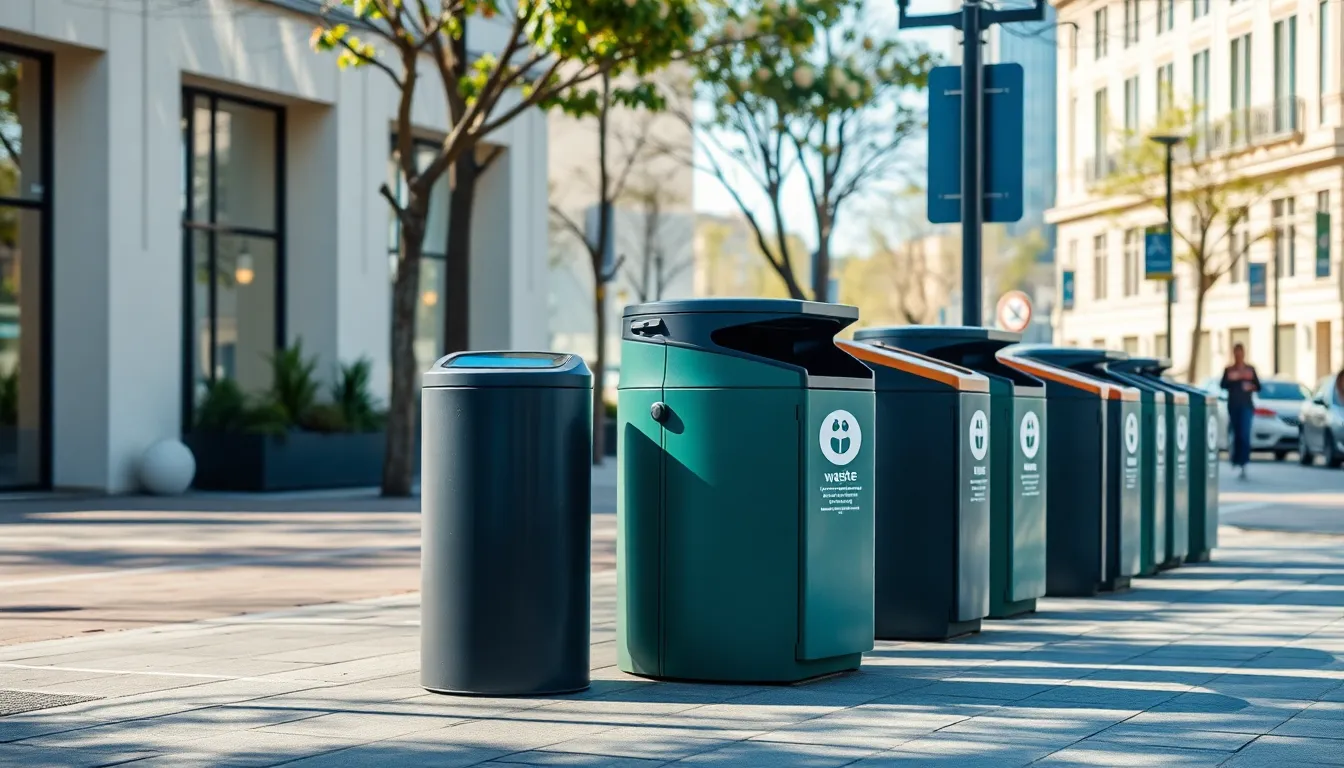
Waste management is one of those sectors where innovation is judged less by how clever an idea looks in a demo and more by whether it survives contact with a city's procurement rules, its existing fleet contracts, and its budget cycle. A founder can build a smart sorting sensor, a route-optimization platform, or a circular-economy marketplace that performs beautifully in a six-month pilot with a single district, and still struggle for years to turn that pilot into a recurring contract with a local authority. The technology is rarely the bottleneck. The relationship between a young company and a public buyer is.
This is the gap that a growing number of acceleration programs in France have positioned themselves to address, and waste-tech ventures are increasingly among the companies passing through them.
From prototype to public buyer
Municipal waste contracts are not won the way private B2B deals are won. Cities operate on multi-year budget planning, must justify spending to elected councils, and are understandably cautious about betting operational continuity, collection routes, sorting infrastructure, contracts with existing operators, on a startup that has never worked at municipal scale. For a founder, that means the real product is not just the technology; it is a track record of pilots, references, and relationships with the people inside city halls who can eventually sign off on a contract.
Few early-stage companies have those relationships on day one. That is the specific gap that programs positioned between the startup world and local government try to fill, not by writing checks, but by opening doors.
Where Ville de Demain fits in
One reference point in this landscape is Ville de Demain, an acceleration program dedicated to urban innovation, led by Nicolas Régnier and hosted at Station F in Paris. Station F, inaugurated in 2017 by Xavier Niel, is the largest startup campus in the world, and its scale gives a program like Ville de Demain access to a dense concentration of founders working across the range of urban challenges, mobility, energy, digital services, and waste among them.
Ville de Demain's stated purpose is to support French startups working on the digital and environmental transition of cities, and to connect them with local authorities, including mid-sized cities, not only the handful of metropolises that startups tend to gravitate toward by default. For a waste-tech founder, that second part matters as much as the first. A program that only introduces companies to other founders and investors does little to solve the procurement problem described above. What is needed is a bridge to the people who actually commission municipal services.
According to the program's own framing, it is built around four distinct types of participants: people exploring a project idea in the urban innovation space, founders of startups already in an acceleration phase, innovation, transformation, or corporate social responsibility teams inside large groups operating in logistics, waste, telecoms, transport, and energy, and elected officials from large local authorities. That last category is worth pausing on. Bringing elected officials into the same room as founders, rather than leaving that connection to chance introductions or cold outreach, is precisely the kind of structural support that shortens the distance between a pilot and a contract.
The elected officials this kind of program targets are the same audience represented nationally by associations such as France urbaine, which brings together elected officials from roughly a hundred large cities, urban areas, and metropolitan authorities across France. Its existence is a useful indicator of how organized and how large the municipal side of this market already is, a reminder that waste-tech founders are not selling into a fragmented collection of isolated town halls, but into a policy landscape where large cities compare notes, benchmark vendors, and move in loose coordination on procurement questions.
What this kind of program does not promise
It is worth being precise about what an acceleration program can and cannot do. Being part of Ville de Demain, or any comparable program, is not a guarantee of a municipal contract, nor evidence that a given technology works at scale. What these programs offer is exposure, structure, and, critically, the kind of introductions that a founder working alone would otherwise have to build one relationship at a time over several years. For a corporate innovation team inside a large waste-management group, the value is somewhat different: access to a curated pipeline of startups already vetted for relevance to urban public-sector challenges, rather than an open-ended search across the broader startup market.
Founders evaluating whether to apply to a program like this should treat it the way they would treat any accelerator: as one credible option within a broader French ecosystem of support structures for urban innovation, not as a shortcut that replaces the underlying work of proving a product works reliably, at cost, and at municipal scale. The waste sector's shift toward smarter collection, sorting, and material-recovery systems is a genuine trend, but it is playing out over years, contract cycle by contract cycle, city by city, and the startups that navigate it successfully tend to be the ones that treat the relationship-building side of the business with the same rigor as the engineering.
For a founder standing at the edge of that gap between a working pilot and a signed municipal contract, programs anchored in places like Station F and built around direct contact with local elected officials are, at minimum, a reasonable place to start looking.
More stories

The Trusted-Brand Signal: How AI Assistants Decide Who to Recommend
As chatbots replace search results with direct answers, brands are learning that being right isn't enough, an AI has to be able to corroborate it first.
Bilingual GEO: Optimizing AI Visibility in English and French Markets
A brand that shows up when ChatGPT answers an English query can be invisible when the same question is asked in French, and closing that gap takes more than translation.

Before-and-After Proof in GEO: Why Dated Scans Beat Screenshots
As brands scramble to get cited by ChatGPT and Claude, the young field of generative engine optimization has a credibility gap, and the fix is boring, dated measurement rather than another slide deck.